Software built to let a candidate conceal who they are and what they know, in real time and undetected, is now a funded and openly marketed product category.
Or read the quarterly Threat Register, our reference on the tools currently sold for use during interviews.
There is an entire industry being built right now to help people conceal who they are and what they know in a job interview. Two minutes on why we are calling that what it is, and who actually pays for it.
“There is an entire industry being built right now to help people lie in job interviews. Not to prepare. Not to practice. To conceal.” Brandon A. Smith, in the videoWatch on YouTube →
1 min 40: why the person you interviewed may not be the person who shows up
Brandon A. SmithChief Executive Officer, Integrity Advocate
Interview assistance used to mean a friend on speakerphone. It now means software that renders below the layer your video platform can capture, funded by institutional venture capital, sold as a subscription, and advertised on the promise that the interviewer will never know. The evidence is no longer anecdotal. It is in analyst research, federal indictments, and a joint alert from eleven national governments.
Gartner's forecast. In the same research, 6% of candidates already admitted to interview fraud, meaning posing as someone else or having someone pose as them. Self-reported fraud is a floor, not a ceiling.
Gartner, Inc., July 31, 2025, survey of 3,000 candidates
The United States, Japan, South Korea, Australia, Canada, France, Germany, Italy, the Netherlands, New Zealand and the United Kingdom told employers to strengthen identity document review and candidate verification in remote hiring.
US Department of State, July 31, 2026
A single laptop-farm operator was sentenced to 102 months after helping overseas workers use 68 stolen American identities to hold remote jobs at 309 US companies and two international businesses, generating more than $17 million.
US Department of Justice, July 24, 2025
Four capabilities do nearly all of the work. We name the products that sell them in the next section, but the capability is the thing to understand first, because the capability is what your process either controls for or does not, whoever happens to be selling it this quarter.
Switching automatically · click either tab to take control
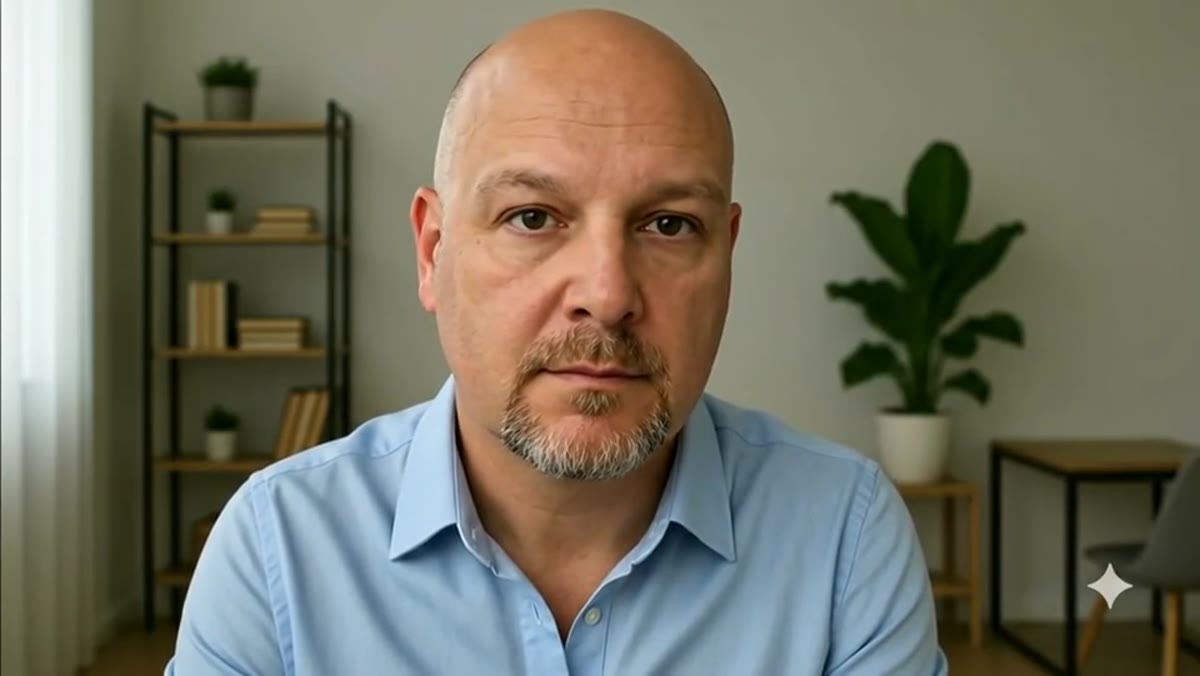 You
You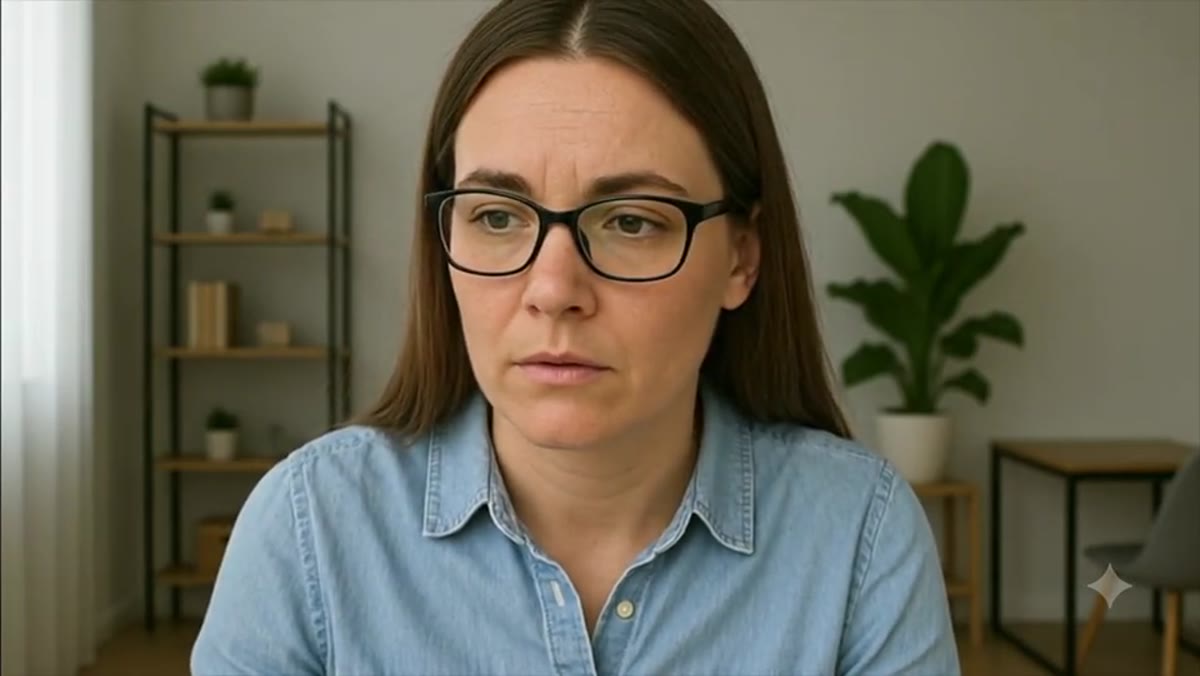 Candidate
Nothing to notice. The panel is excluded from the operating system's capture interfaces, so it is absent from the feed being shared.
Windows provides a documented display-affinity flag that omits a window from anything captured through its screen capture interfaces. It exists for legitimate reasons, like keeping recording controls out of a recording. Vendors claim equivalent behavior on macOS. Microsoft is explicit that it is not a security guarantee, which is exactly why a screen-share-only countermeasure cannot be the answer.
A phone or tablet running the assistant sits outside every browser-level control that any platform can apply. Nothing installed on the candidate's computer can see it. At least one vendor has moved to this model deliberately and markets it as the safer route.
A different person sits the interview or the assessment. The FBI names attendance at virtual interviews on someone else's behalf as a service being sold at scale. Commercial operations exist to supply it, priced by the hour.
Real-time face replacement and voice cloning are commodity capabilities now. In one documented case a recruiter caught it only because facial expressions lagged the speech by a fraction of a second. In a study of 1,276 people, average human accuracy at telling AI-generated media from real was 51.2%.
The FBI's published countermeasure is to ask the candidate to wave a hand in front of their face, and to point the camera out the window. That is sound advice. It is also a manual check, run by a recruiter, in every interview, forever, and current-generation models already defeat it.
FBI Internet Crime Complaint Center, Alert I-072325-4-PSA, July 23, 2025Every line below is the vendor's own published marketing, quoted verbatim, with their own list price, checked on August 18, 2026. We are not characterizing what these products do. We are showing you what they say they do, to the people interviewing at your company.
"Cluely never shows up in shared screens, recordings, or external meeting tools."
"20+ of the best undetectability features. 100% Invisible to Screen-Recording."
"100% Invisible & Undetectable. Runs quietly in the background during live interviews even while you are screen sharing."
"The interviewer sees only you and your normal screen share. There are no overlays. It runs invisibly."
"Pass any SWE Interview with Undetectable AI."
"Cannot be seen or captured by screen-sharing software and is invisible in all screenshots."
"100% interviews undetected," using operating system "display-affinity flags."
"100% undetectability on every platform. Zero detections."
Open source, runs locally, ships a "stealth mode." Marketed as the free alternative to the paid tools above.
Then there is the part that is not software at all.
A person sits your interview instead of the candidate. Advertised openly on business marketplaces at roughly ₹5,000 to ₹18,000 per hour depending on the job description. The same vendors sell post-hire "job support," so the substitution often continues after the offer.
No product is sold as "deepfake your interview." Free, open-source live face-swap tools are simply repurposed. One has more than 80,000 GitHub stars and reached number one trending. Researchers built several usable interview identities in about seventy minutes on consumer hardware.
Hidden instruction text placed in a resume so your AI screening reads it and a human never sees it. Spread through free templates and social video, not sold as a product. Peer-reviewed measurement puts it in roughly 1% of a 200,000-resume corpus.
We do not link to any of them, and we do not name them anywhere else on this site. Naming a vendor dates the argument the moment the next one launches, and there is a new one nearly every month. This page exists so you can recognize what you are looking at. The full register, with all 27 products and the control that catches each one, is the quarterly document below.
A face on a screen has not been proof of identity for two years. Verification is a deliberate, documented step with a result you can produce later.
It is not a recruiter's impression at the end of a call, and it should not be the recruiter's job to carry.
Operation Nightingale produced roughly 7,300 fraudulent nursing diplomas. The buyers became eligible for licensure, obtained genuine multi-state licenses, and went to work in hospitals.
Every employer who checked that license got a clean answer. Only identity-bound assessment proves the person earned it.
US Department of Justice, September 15, 2025
When one state bar exam was remotely proctored, more than 3,000 of roughly 9,000 examinees were flagged. On review, 98% were cleared and 47 were implicated. Elsewhere, only about 10% of faculty ever review the video when someone is flagged.
An unreviewed flag is not a finding. It is an accusation with nobody's name on it.
Electronic Frontier Foundation, June 2021
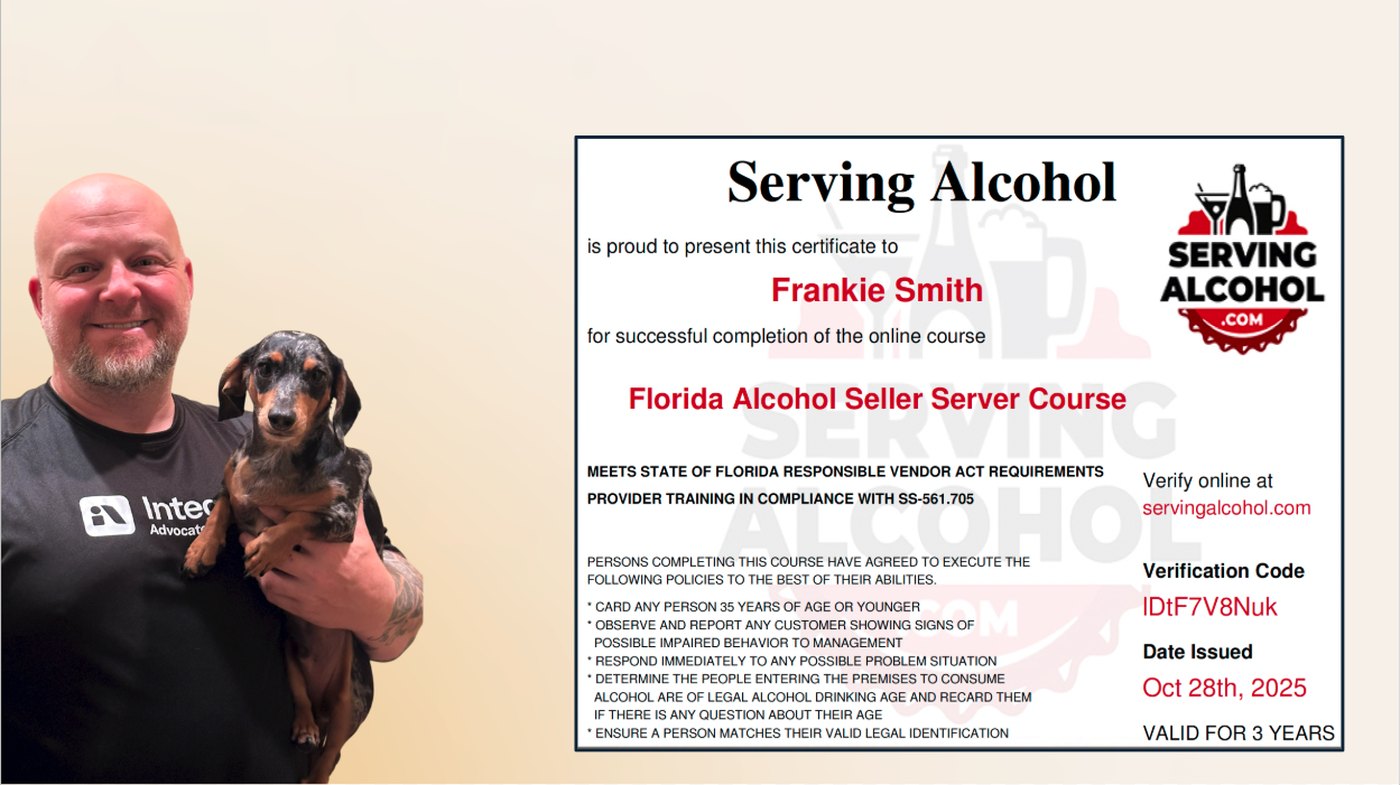
To show how exposed unverified online certification really is, we enrolled Frankie, a dachshund, in a Florida Alcohol Seller-Server course.
Nobody verified who was taking it. Nobody confirmed a human sat the exam at all. Frankie passed.
"Frankie Smith" was issued a certificate stating it meets the State of Florida Responsible Vendor Act, valid for three years, complete with an online verification code that checks out.
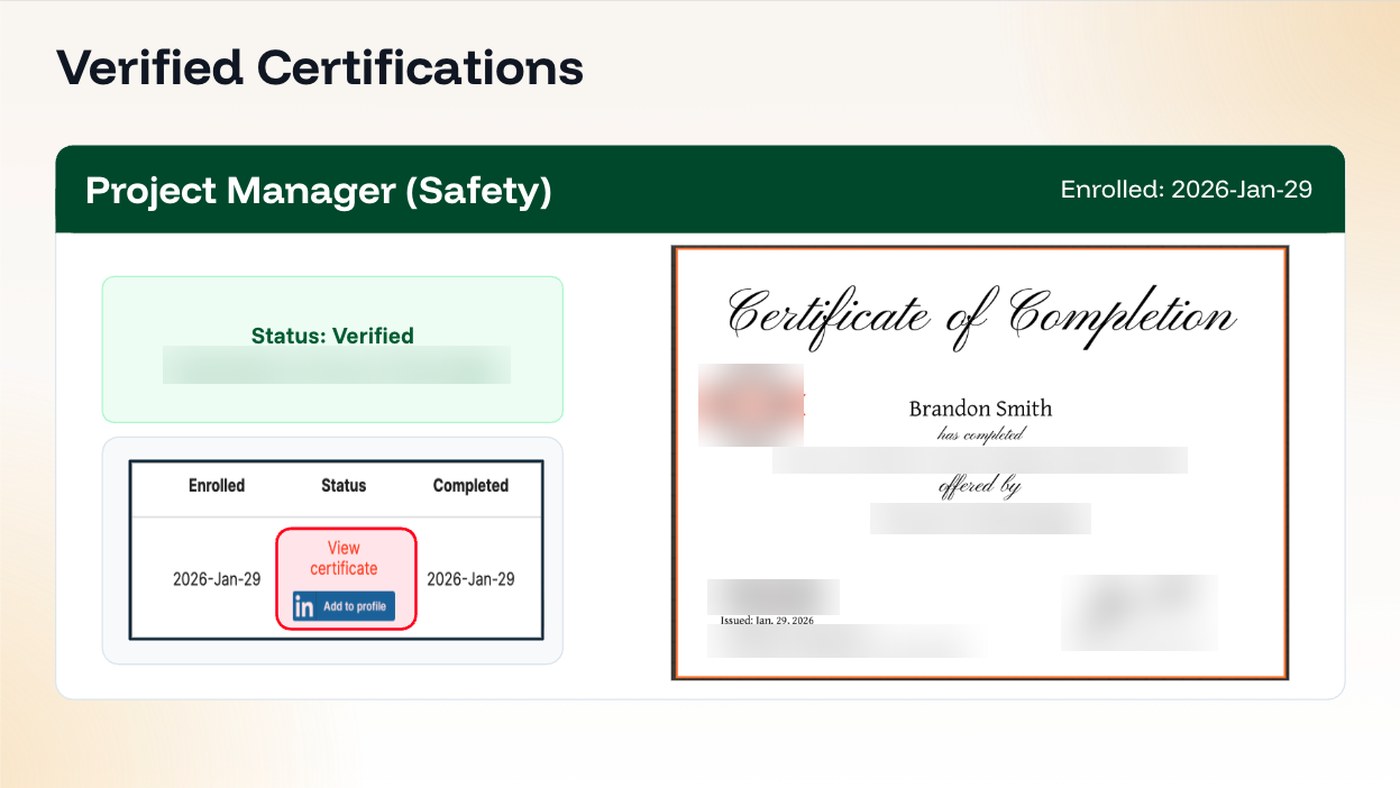
Getting the certificate is only step one. The platform then hands you a button that publishes it straight to your LinkedIn profile.
One click, and an unverified credential becomes public professional standing: a certification badge on the profile a recruiter screens, in a section built to be trusted at a glance. Nobody down the line re-checks who actually sat it. They check that it is there.
Thirty minutes with your talent, security and compliance leads. We map your funnel, identify where an undetectable assistant or a proxy participant would pass through today, and show you exactly what the record would look like if a hiring decision were ever challenged.
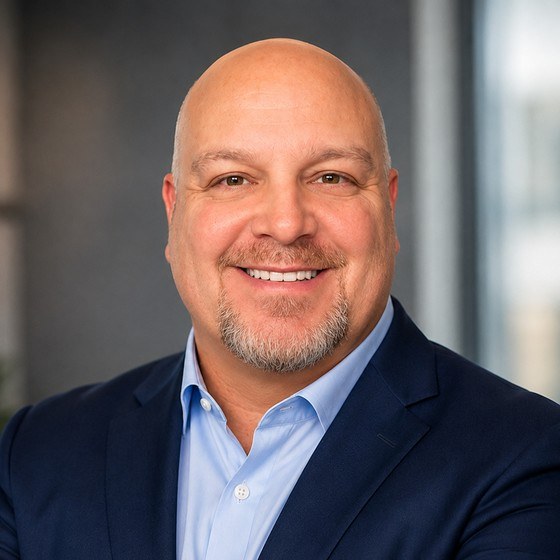 Brandon A. Smith
Chief Executive Officer, Integrity Advocate
Taking meetings this week
Brandon A. Smith
Chief Executive Officer, Integrity Advocate
Taking meetings this week
Thirty minutes, direct with our CEO. A working session, not a pitch. Bring whoever owns talent, security or compliance and we will map your funnel live.
Open the scheduler →Opens Brandon's calendar in a new tab. Pick any open slot.
Not ready to book? Get the Threat Register instead, or email sales@integrityadvocate.com. See our privacy policy.
You should not watch a warehouse applicant the way you watch a pilot. Coverage matched to consequence is both the fair answer and the defensible one.
Cost-effective integrity without adding friction to the candidate experience.
Comprehensive monitoring with the flexibility most hiring teams need.
Multi-layered security and rigorous review for decisions that will be scrutinized.
Most organizations buy assessment, proctoring and credentialing as three separate tools, from three vendors, with three sets of records. That fragmentation is the problem. When a hire is challenged, nobody can show an unbroken line from the person who sat the assessment to the credential that says they passed.
The question is no longer "was this assessed." It is "can you defend how it was earned?"
Where the content lives and performance is actually measured.
Where identity is confirmed, the session is monitored, and integrity decisions are documented by a human.
Where verified performance becomes a tamper-resistant credential anyone can check.
Every tier includes mandatory human review of every flag. Runs entirely in the browser: no downloads, no extensions, no plugins, on any device including Chromebooks, tablets and mobile. 65+ languages with 24/7 multilingual support. Room scan is available at the Pro tier and is off by default for hiring use.
A clean division of labor. You own the role, the assessment content and every hiring decision. We own the integrity layer around it and the operations that keep it running.
We configure the integrity layer to your roles, your rules and your testing windows. Use your existing assessment provider or load content into our secure assessment environment. White-glove implementation with live admin training.
Typically 2 to 4 weeksThere is nothing to schedule. You register the candidates for a requisition and set a deadline. Each person takes the assessment whenever it suits them before that date, at any hour, in any time zone. No proctor appointment windows, no booking queue, no candidate waiting a week for a slot.
On demand, 24/7Each candidate receives simple browser-based access. Nothing to download, no extension, no plugin. Works on desktop, tablet or phone, including on managed corporate devices and in low-bandwidth locations.
No install, any device
At the start of the session the candidate captures a selfie, processed on their own device, and a photo ID. We match the ID to the name and to the person, an independent check on top of whatever login you use.
AI runs the pre-check. A person confirms it. The technology does the first pass at speed, then a trained reviewer makes the actual determination. Not on the top tier, not on request. On every session, as the standard.
Verified by Human Review™
The session is monitored to the rules you configured for that role. Our technology surfaces areas of concern. A trained human then reviews the session and makes every final call. Live support is available to candidates and your staff throughout.
24/7 support, never outsourcedAfter each cycle you receive an exportable report: session outcomes, any confirmed flags with timestamped evidence, and aggregate integrity metrics. This is the record you produce if a hiring decision is ever challenged.
Built for appeals and disputesA candidate should never have to trade their privacy for a defensible process. The result is a clean session that leaves almost no data footprint at all, while a contested one leaves exactly the evidence you need.
Every flag is reviewed by a trained person before any outcome is issued, at every tier. Not as an upgrade, not on the enterprise plan. As the standard.
That single design choice is what protects the candidate. It is the control that turns an automated signal into a reviewable decision with a documented rationale behind it, which is exactly what a regulator, a court, or the candidate themselves is entitled to see. An unreviewed flag is not evidence. It is an accusation with nobody's name on it.
Two audiences, two sets of concerns. Both are fair, and our category has earned some of the scrutiny it gets.
It is the reason there is no install. Every download, extension and lockdown browser is a point where candidates abandon, and it disproportionately excludes people on borrowed, mobile or locked-down corporate machines, which is a disparate impact problem as well as a funnel problem.
Integrity Advocate ranked first for usability among online proctoring platforms in G2's Summer 2026 index, with the strongest user adoption score in that comparison.
You can keep your current assessment provider and add the integrity layer around it, or load content into our assessment environment. You send the candidate list for each requisition and we handle enrollment, verification, monitoring and reporting.
Talk to us about your specific ATS during setup, since integration depth varies by platform.
That is the design goal. Hiring is regulated in ways education never was: the EEOC's guidance on algorithms and the ADA, Title VII, the Illinois AI Video Interview Act, New York City Local Law 144 and Colorado's rules all bear on it.
The control that matters is documented human adjudication. An automated system that contributes to an adverse decision with no human review and no recorded rationale is the exposure. A reviewed decision with written reasoning is the mitigation.
It is a real, documented problem in this category and we will not pretend otherwise. Published research has found face detection performing measurably worse on darker skin tones and generating more flags for candidates who were doing nothing wrong.
Our answer is architectural: the AI never issues an outcome. A trained reviewer adjudicates every flag with a documented rationale, which is precisely the control that converts a noisy signal into a reviewable decision.
An honest answer matters more than a confident one. Identity verification bound to the assessment addresses proxy test takers and synthetic identities. Screen monitoring, AI application detection and messaging and remote-access flags address on-device assistance. Environmental flags address visible devices, other people present and headphone use.
What no software can see by itself is a phone held out of frame in a room nobody is watching. That is why coverage is tiered, why the higher tiers add a second camera view for the roles that warrant it, and why we would rather tell you the limit than sell you a guarantee.
Pricing depends on tier and volume, so it is a short conversation rather than a table. Most teams start on a single requisition family, prove it on the roles where a bad hire costs the most, then expand.
Typical stand-up is two to four weeks including white-glove implementation and live admin training.
We are a proctoring and identity verification company with more than twelve years of operation and over ten million proctored sessions, much of it in certification and licensure, which is employer-facing and defensibility-driven work. Hiring is an extension of that, not a pivot away from it. Ask us about the regulated-workforce side of the business.
No software is installed on your device. There is no download, no browser extension and no plugin. We have no access to your files, your other applications or anything running in the background, and nothing continues after the session ends.
What is monitored is scoped to the assessment itself and to the stakes of the role, which is why a screening exercise is not watched the way a final round for a licensed position is.
No, and this is the part we care most about. Our technology surfaces areas of concern. A trained human being then reviews the session and makes every final call, with the reasoning written down.
An unreviewed flag is not evidence. It is an accusation with nobody's name on it, and we do not issue those.
Your identity selfie is processed on your own device. No biometric data is collected or stored. Sessions with no concerns are typically deleted within 24 hours, and held longer only where the employer's own policy or record-keeping law requires it.
Your data is never sold, and it is never used to train AI models.
No. It runs in an ordinary browser on a desktop, laptop, tablet or phone, including Chromebooks and managed work devices, and it is built to work on low-bandwidth connections. Support is available 24/7 in more than 65 languages if anything goes wrong.
Tell the employer you are applying to and they will arrange it. The platform is built to WCAG 2.1 and supports accommodation workflows. Needing an accommodation is not a flag and is never treated as one.
Every confirmed flag is documented with timestamped evidence in a review record that supports findings and appeals. That record exists so you can see what was actually observed and challenge it, rather than being told a score came back bad.
Still reading
Thirty minutes with Brandon and your talent, security and compliance leads. We map your funnel live and show you where an undetectable assistant or a proxy participant would pass through today.
Or email sales@integrityadvocate.com.
Every tool and service currently marketed for use during live interviews and assessments, what each one defeats, and which control catches it. Updated quarterly, sent to you each edition.
Download the PDF or read it in the browser. Both are the full Q3 2026 edition.
Download the PDF ↓ Read it here →
We will be in touch when the Q4 edition publishes.